KNRG supports SpaceOMIX research aboard the historic Fram2 mission
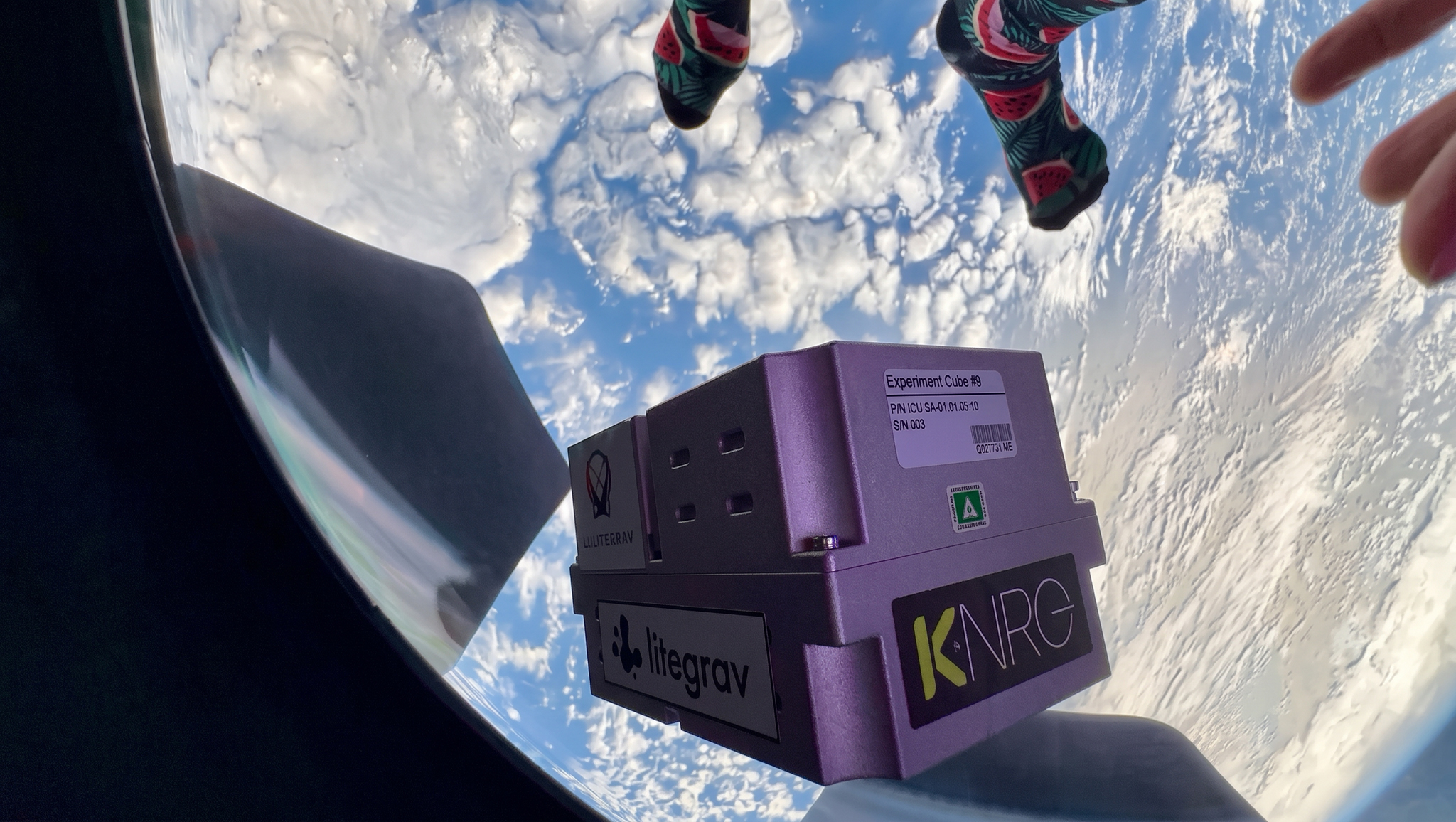
Space biotech takes human health research into orbit
KNRG supports SpaceOMIX research aboard the historic Fram2 mission
In March 2025, SpaceX launched Fram2, the first human spaceflight ever to enter a true polar orbit and fly directly over both the North and South Poles. On board the Crew Dragon Resilience, four civilian astronauts spent approximately 3.5 days orbiting Earth at an altitude of around 430 kilometres, conducting a wide range of scientific experiments focused on human health, performance and biology in space.
Among the research connected to this historic mission were two initiatives from Maltese space biotechnology company SpaceOMIX: Space THAL and MELITE. As a sponsor and science partner of SpaceOMIX, KNRG supports this exploration of human biology in extreme environments and the search for scientific insights that may ultimately have applications far beyond spaceflight.
Fram2 launched from NASA's Kennedy Space Center in Florida on March 31, 2025, and returned to Earth on April 4 with a splashdown in the Pacific Ocean off Southern California. The mission's unusual polar trajectory allowed its crew to travel from pole to pole in roughly 46 minutes, offering a perspective of Earth never previously experienced by a human crew in orbit.
During the mission, the four-person international crew carried out 22 scientific experiments. Research included the first human X-ray images taken in space, studies into skeletal and muscular performance, biological experiments in microgravity and investigations into how humans may operate more independently during future space missions.
Understanding blood in microgravity
The Space THAL project focuses on thalassemia, an inherited blood disorder that affects the body's production of haemoglobin. By investigating blood-related biological processes in microgravity, researchers aim to gain a better understanding of how cells and haemoglobin production respond when one of the most constant forces on Earth — gravity — is dramatically reduced.
The project brings together international expertise from organisations including Mayo Clinic, Weill Cornell Medicineand Sanquin in the Netherlands. Studying these biological systems in space provides researchers with experimental conditions that are extremely difficult to replicate on Earth and may reveal processes that remain less visible under normal gravity.
Exploring the human microbiome beyond Earth
The MELITE project focuses on another fundamental part of human health: the microbiome. The human body is home to trillions of microorganisms that interact continuously with our immune system, metabolism and wider physiology. Spaceflight introduces conditions such as microgravity, radiation and environmental isolation that can affect both the human body and the microbial communities associated with it.
By investigating how these microbial populations behave in space, MELITE aims to generate new insights into the relationship between the microbiome and human health, including areas connected to metabolic conditions such as diabetes. The research is being conducted with support from scientific partners including Falak for Space Science and Research and academic institutions such as the University of Malta.
The relevance extends beyond future missions to the Moon or Mars. Understanding how biological systems respond to extreme environments can also create new perspectives on health and disease on Earth.
Space as a laboratory for human health
Space research is increasingly moving beyond the question of how humans can survive away from Earth. Microgravity offers scientists a unique laboratory in which cells, microorganisms and physiological systems can behave differently, allowing researchers to examine biological mechanisms from entirely new perspectives.
For KNRG, the partnership with SpaceOMIX connects with a broader commitment to science, innovation and human performance. Supporting research in an environment as extreme as space reflects the same underlying curiosity that drives progress in life sciences: understanding how the human body functions, adapts and performs, and how that knowledge can ultimately be translated into better solutions on Earth.
Fram2 may have lasted only a few days, but its significance reaches much further. As private spaceflight increasingly becomes a platform for serious scientific research, missions like Fram2 demonstrate how space can become a new frontier not only for exploration, but for biotechnology and human health.
Research beyond Earth. Knowledge for life on Earth.
ZERO **SUGAR**
ALL **NATURAL**
POSITIVE **ENERGY** DRINK
POSITIVE **ENERGY** DRINK
ZERO **SUGAR**
ALL **NATURAL**
POSITIVE **ENERGY** DRINK
ZERO **SUGAR**
ALL **NATURAL**
POSITIVE **ENERGY** DRINK
POSITIVE **ENERGY** DRINK
ZERO **SUGAR**
ALL **NATURAL**
POSITIVE **ENERGY** DRINK